

Opera Singer to Tech Leader: Anna’s Story
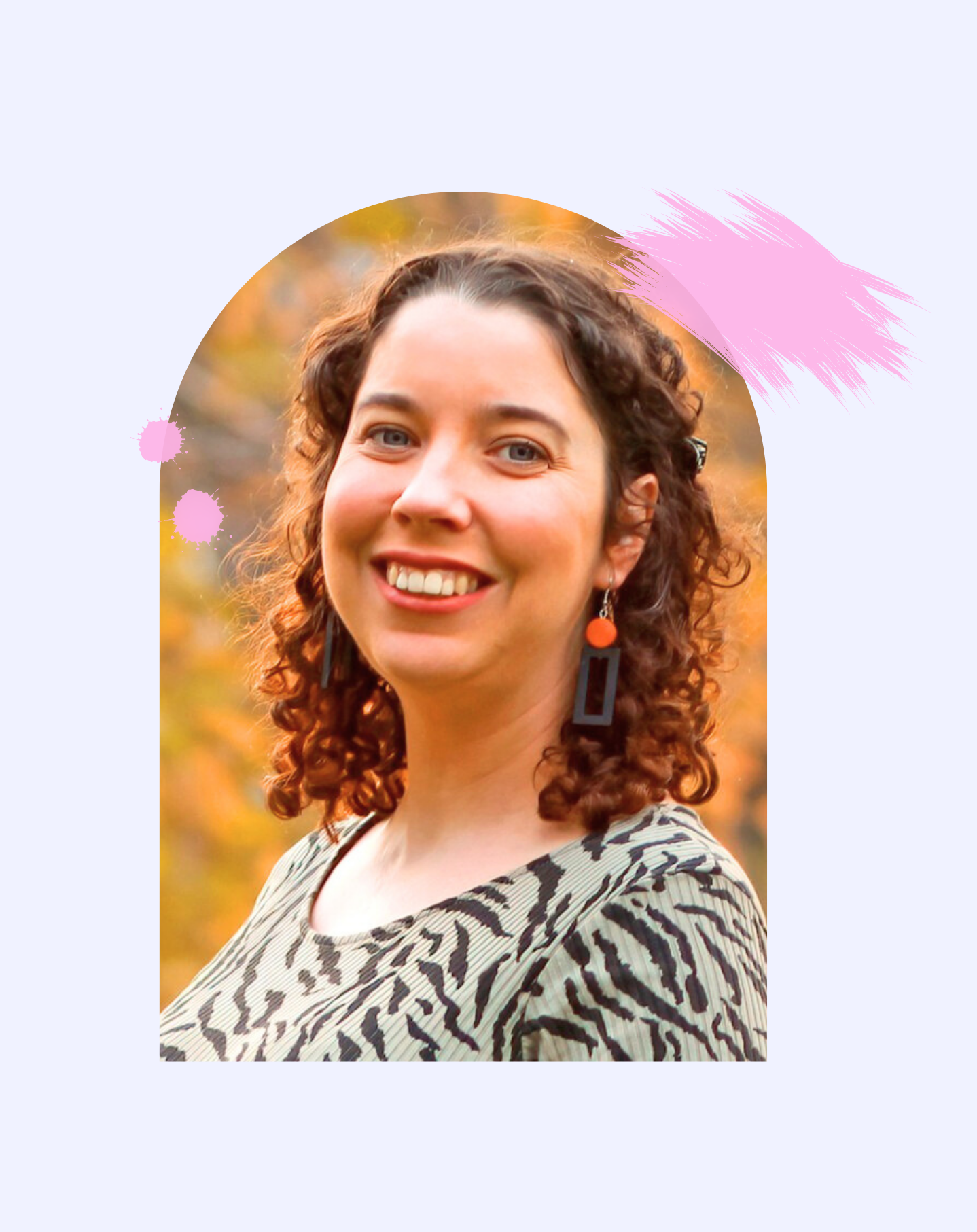
Anna McDougall is an absolute powerhouse. With a past in opera, in which she accumulated several music scholarships, Anna made a change and is now a Director of Product and Engineering, as well as an advocate for minorities and absolute beginners who want to get into Tech. She has also launched a book and collects incredible multifaceted adventures under her belt, all while being a mom, participating in podcast interviews and attending conference talks (phew!).
This interview is a part of Multi You‘s original project: Multi Careers. Get inspired by unapologetic multi careers that defy convention!
Follow Anna’s adventures:
1. Dear Anna, it’s an honor to host you at Multi Careers! You introduce yourself as “a former opera singer, and not your typical techie.” Tell us more: what brought you to where (and who) you are today?
Thanks for including me! My story is a wild ride. I had some exposure to programming as a kid with HTML and Visual Basic at high school, but it never went anywhere and I ended up studying an Arts degree with a major in Media and Communications at the University of Sydney.
After working in digital marketing and project management, I made my first major career change and got my Masters in Music at Sydney Conservatorium of Music, majoring in Opera Performance. I moved to Germany to pursue my career as an opera singer, which I did very successfully. I sang on three different continents both as a chorister and as a soloist, and it was a lot of fun but also very emotionally and physically grueling.
On top of that, once you’re a singer, you kind of just… stay a singer. As someone who was always very ambitious and really wanted to ‘climb the ladder’ I found this quite demotivating, and I yearned for something where I could flex my logic muscles and really pursue the heights of my intellectual ability in a way that opera wasn’t doing.
So when my daughter was born and Corona hit, I took the opportunity to learn coding and then enrolled in a one-year certification. I never completed that certification because I was hired only 9 months into the course as a Junior Software Engineer: that was the start of my tech career!
I say I’m “not your typical techie” because I just don’t tick most of the usual boxes you associate with a developer: I’m a mum, I’m a massive extrovert, and my background/CV are just not what any recruiter would expect.
2. Sometimes, we look at someone’s career change and there seems to be no rhyme or reason on paper. Let’s challenge that assumption. What are some unexpected common threads or “a-ha themes” that you realized unite Opera and a role as a leader in Tech?
Great question! As said, my background doesn’t make much sense on paper at all so I relate to this very strongly. However, my work in opera has helped me a lot as a tech leader. For one thing, in opera you have to be able to inhabit many different characters, and to understand many different motivations.
There is a saying on the stage that “Everyone is the hero of their own story” so even when playing the role of a villain, you have to be able to see yourself as a hero. This means that you learn to be very empathetic, to understand multiple viewpoints, to put yourself in others’ shoes. As a leader, this kind of ability is priceless, especially when it comes to giving and taking feedback.
On the technical side, I see a lot of crossover between classical music and programming: namely, that you learn a set of highly-specific tools/systems, and you know what you want the ‘end effect’ to be, but the skill/art is in applying those tools and systems to achieve that effect.
Both programming and opera are a craft, and as with any craft it can be learned as long as you are able to break it down into parts, practice, and accept honest criticism.
3. As you transitioned from opera singer towards software engineering, you must have faced a lot of differences you hadn’t expected. Each career change comes with challenges we couldn’t have foreseen. Can you give examples?
Actually, all of the surprising differences were positive! The skills were easier to learn than in opera, the pay was better, and people actually wanted me to work for them. Compare this to opera which we call ‘the Olympic sport of singing’, and where you can train for 5-6 years and still never get a job, and if you do it’s poorly paid. Meanwhile I did one year of retraining for tech and instantly got a massive pay raise compared to my opera career.
4. From your perspective, what are some common misconceptions people still have about the world of Opera that you found not to be true? What about the world of Tech?
I think the average person would assume tech was a harder job than opera, which is absolutely not true. People often view opera as being fun and glamorous, but the truth is that a lot of blood, sweat and tears go into making any opera career happen. You get the occasional fancy party, sure, but even there you feel like you have to be on the lookout for a sponsor or a new job, because the work insecurity is so high.
On the flipside, I think people view tech as being something only super smart people can do, and that’s just not true. Basic programming skills are easily teachable, and I really believe that almost everyone could get to the level of a junior software engineer if they really wanted to. For opera, I think very few people can develop the voice, the acting skills, the stage skills, and the level of resilience you need just to make it to the junior leagues.
5. Imagine you have two lists in front of you: one lists what it takes to become an opera singer. The other lists what it takes to become a successful engineer in Tech. How similar or different would these lists be?
I think there are some traits that make people successful in any job, such as the ability to communicate, to take constructive feedback, and to learn new skills. For opera and tech specifically, I would say the ability to practically apply systematic knowledge is crucial. Both work a lot with new/different languages so having some ability to pick up languages is also helpful.
Where they differ is mostly in the physical skill needed for opera, some of which I mentioned before, but to broaden that a bit I would say that having stagefright, for example, is not a dealbreaker in tech, but would mean you have no career in opera.
Similarly, you need to be good at manipulating your voice in opera – not only for the skill of singing, of course, but also to be able to pronounce different languages. I sang in seven different languages and although you don’t need to be perfect, you are encouraged to try to sound as native as possible and it takes so many hours of work to improve those skills.
There are many other examples but funnily enough, they all seem to be things that make opera more difficult! Put in other words: I think most of what makes for a good performer will make for a good programmer, but a good programmer is most likely lacking most of what would make them a good performer.
6. Getting historically excluded people into Tech is one of your life goals. You’ve helped a lot of people begin their journey. If you could tell underrepresented Tech lovers and beginners three key things they should know, what would they be?
Oof, it’s hard to choose. I would say there are a few things that are good to remember:
Tech isn’t the realm of geniuses: people of totally average intelligence can be successful in this field, so don’t be intimidated by your preconceptions of what kind of person you need to be, or be under the impression that you have to be some sort of math whizz to do basic programming.
Although learning technical skills is essential, you are more likely to get a job through contacts and networking than through simply being amazing at your craft. Attend meetups, go to hackathons, connect with online communities, write a blog, and post about your journey on Twitter and/or LinkedIn. That alone will put you so far ahead of most newcomers to the industry.
If you’re from an historically excluded group, you are unlikely to see many people like you in your job. I strongly believe in “Be the change you want to see” so for me, this doesn’t hold me back at all: in fact, it encourages me to keep going. For many people though, they can find being the only 1 or 2 people like them in a team to be exhausting. There is emotional labour there that you will have to undergo: only you can decide if it’s worth it, and there is no wrong answer.
7. Apart from participating in podcast interviews, conferences and social media, you’ve also recently finished a book (congratulations!). What messages did you find urgent to tell?
I’ve mostly engaged with my community via short-form text (Twitter, LinkedIn, etc.) and although my blog posts were often well-received, I really wanted to have a place to just condense all of my knowledge. I get asked a lot of the same questions over and over again, so I wanted to have a place to refer people to when those questions came up. Similarly, I felt like a lot of the information in my book is spread out over many different resources, because it covers three different skills (learning tech skills, social media/networking skills, and job application skills). I wanted one central resource that could guide people from zero to hired.
8. You volunteered as a radio host for 5 years (presenting news for the visually impaired, as well as those of non-English speaking backgrounds). You also volunteered as a Spanish translator/interpreter. How did these activities stay with you to this day?
One of the toughest things about moving countries is losing the connections you have to community and family. For me, I loved being part of the 2RPH and Oxfam communities and I developed many skills and met so many terrific people through both.
Now that I’m working full-time and have a family, plus being an immigrant here, I feel less able to access the community and to become involved. I think it’d help if I held a religious conviction because the great thing about religion is giving you an ‘automatic’ community, but that’s just not part of my beliefs. In terms of what they gave me… it’s funny, I never thought of it that way, because the aim was always to give them something.
If I think about it, I suppose the gift they gave me was in the happy memories, of feeling like I made some sort of difference. That’s very important to me and my life philosophy, so I treasure that.
9. Let’s wrap it up by looking ahead. What upcoming adventures do you have in mind? What stories would you like your career to tell in some years?
I am working on so many amazing projects right now. I’m actually pregnant with my second child and will be going on leave in December, so I’m feeling pressed to get a lot of my tasks up and running in the next few months so that they’ll be in place while I’m on leave. I’m working on women’s mentorship programs, a minimal NMT website, as well as speaking and conference programmes for our engineers.
I think my main goal for the next 5-10 years is to feel like I’m making a concrete difference to the lives of NMT engineers and the wider tech community. Career-wise I want to learn more about leadership, especially from a practical/business perspective (budgeting, time management, project coordination, etc.).
I laugh at the idea of having hobbies again but hopefully it will happen! I definitely want to focus a lot more on my health and fitness post-pregnancy: I used to be very strong and participate in novice powerlifting events, so I’d love to even be able to get a part of that strength back, because I find physical strength helps me with mental strength. I would maybe like to sing or act again in some sort of community group, but I feel like that’s still a long way away.
